

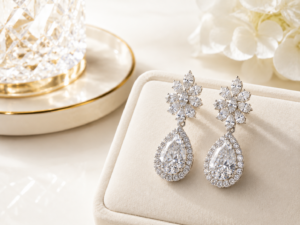
Luxury diamond earrings are one of those assets people often underestimate. They sit in a drawer, worn occasionally or not at all, while their market value changes daily. If you have a pair you no longer wear and you want real money for them, the process is more straightforward than most people think. Knowing how to sell diamond earrings the right way, starting with understanding value and ending with choosing the right buyer, makes all the difference between a fair price and a missed opportunity. This guide covers every step.
Step 1: Understand What Drives Diamond Earring Value
Before approaching any buyer, you need to understand what they are evaluating. Diamond earrings are not priced as a single unit in most buyers’ minds. They are assessed on several distinct factors.
The diamonds themselves are graded on the Four Cs: Cut, Color, Clarity, and Carat weight. Cut affects how much the stone sparkles. Color is graded from D, which is colorless, to Z, which has a visible tint. Colorless stones at the top of the scale command higher prices. Clarity measures internal flaws, and carat weight reflects size. A high-quality one-carat round brilliant stud will always attract stronger interest than a larger stone with poor cut and low clarity.
The metal setting also adds value. Platinum and 18k gold settings carry meaningful material value in addition to the diamond. Check for hallmarks stamped inside the earring post or backing.
Brand or designer origin can significantly boost the price. Signed pieces from houses like Tiffany, Van Cleef, or Cartier attract a premium because buyer demand for those names in the secondary market is consistent and strong.
Step 2: Check for Certification and Documentation
Documentation is one of the most direct ways to increase your offer. If your earrings came with GIA or AGS grading certificates, hold onto them. These certificates provide an independent, third-party assessment of your diamonds’ quality. Buyers trust certified diamonds more because the grading removes uncertainty. The result is often a higher, faster offer.
No certificate? You still have options. A professional gemologist can appraise the earrings and provide a written valuation. This gives you a benchmark figure to work from and something concrete to present to buyers. Going in with documentation of any kind puts you in a better negotiating position than going in empty-handed. Also, gather original boxes, receipts, or any paperwork from the original purchase. For designer or brand-name earrings, these materials can add a noticeable bump to your offer.
Step 3: Get a Professional Appraisal Before You Sell
An appraisal is not optional for anyone serious about getting maximum value. It is the foundational step. A certified gemologist physically examines the earrings, evaluates the stones and metal, and produces a written report. This report tells you what the earrings are genuinely worth on the current resale market, not what you paid for them originally, and not what a buyer tells you they are worth. Those numbers can be very different.
One important note: insurance appraisals and resale appraisals are not the same thing. An insurance appraisal reflects replacement cost, which is typically higher than what the secondary market will pay. What you want is a fair market value appraisal, which reflects actual buyer demand today. With a proper appraisal in hand, you walk into any buyer negotiation knowing your floor. Nobody lowballs an informed seller as easily as an uninformed one.
Step 4: Know Your Selling Options
There are several ways to sell gold and diamond jewelry, and each route comes with real trade-offs.
Local pawn shops and jewelry buyers offer the fastest transactions. Walk in, get evaluated, and walk out with cash the same day. This is ideal when speed matters most. Offers reflect the buyer’s need to resell at a margin, so expect a percentage of market value rather than full appraised value. Choosing a reputable buyer with experience in fine jewelry makes a significant difference in the quality of the offer.
Specialty jewelry buyers focus specifically on diamonds and fine jewelry. They understand grading, certification, and current secondary market demand more deeply than general buyers. For luxury earrings with significant stone quality or brand recognition, a specialist is often worth seeking out.
Step 5: Compare Multiple Offers and Negotiate
Never settle for the first number you receive. Get at least two or three quotes before committing. The gap between buyers on the same pair of earrings can be hundreds of dollars. When you have multiple offers in hand, use them as negotiating leverage. Let buyers know you are comparing. Reputable buyers will often sharpen their offer when they know competition is involved.
Ask every buyer to explain their pricing. What are they paying per carat? How are they valuing the metal? What deductions are they applying? A transparent buyer answers these questions clearly. One who deflects or rushes you toward a decision is a red flag. Always ask for the final offer in writing before you hand anything over, and confirm the payment method in advance.
FAQs
Do I need both earrings to get a good offer when selling?
Selling a matched pair almost always gets a better offer than selling a single earring. Buyers value pairs because they are more resalable. A single earring may still sell, but expect the offer to be meaningfully lower per stone.
How do I know if my diamond earrings contain real diamonds?
Look for metal hallmarks like 14K or PT950 on the backing. A jeweler can also perform a quick in-store test using a diamond tester. GIA or AGS certificates, if available, provide the most definitive confirmation of authenticity and quality.
Does the earring style affect the resale price?
Yes. Classic styles like round brilliant studs hold the strongest demand in the secondary market. More unusual or trend-specific designs may appeal to a narrower buyer pool, which can affect both the speed of sale and the offer amount.
Is it better to sell diamond earrings locally or online?
Local buyers offer speed and security, with same-day payment and no shipping risk. Online platforms can yield higher prices but take longer and require more effort. Choose based on whether speed or maximum return is your priority.
Can I sell just the diamonds from my earrings without the settings?
Yes. Some buyers purchase loose diamonds separately from the metal. In certain cases, you may get more by selling the diamonds and the gold separately, particularly if the settings are worn or damaged. A professional can advise you on the best approach.
Sell Your Diamond Earrings With Confidence at Pawn Shop Queens
We know how much is riding on a sale like this. At Pawn Shop Queens, we offer free, no-obligation appraisals on diamond earrings and fine jewelry, with honest pricing and same-day cash payment. Our team evaluates every piece carefully, explains the offer clearly, and never pressures you to commit. Whether your earrings are certified studs, luxury brand pieces, or vintage estate jewelry, we know how to assess them properly and pay you fairly. Visit us at 63-62 Saunders St, Suite 204, Rego Park, NY 11374, or call (718) 200-0332. Your free appraisal is ready when you are.