

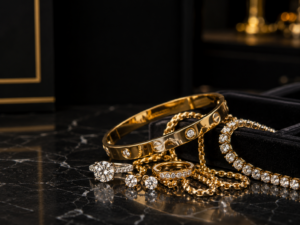
You open a drawer and find a ring you never wear, a necklace from a past relationship, or a bracelet you inherited years ago. It has been sitting there collecting dust while its value sits untouched. Sound familiar? The good news is jewelry is one of the easiest valuable assets to turn into cash, and you do not have to wait long to do it. If you want to sell your jewelry quickly and fairly, this guide walks you through every step.
Step 1: Sort Your Jewelry Before Anything Else
The first thing we recommend is taking everything out and sorting it. This sounds simple, but it saves time and prevents confusion later. Separate pieces by metal type: gold, silver, platinum, and fashion or costume jewelry. Look for stamps on each piece. Gold is usually marked 10K, 14K, 18K, or 24K. Silver often shows 925. Platinum may read PT or Plat. These stamps tell you the purity of the metal, which directly affects what a buyer will pay.
Costume jewelry contains little to no precious metal. Setting it apart from real jewelry upfront keeps the process clean and focused.
Step 2: Know What Your Jewelry Is Worth
Before walking into any shop or contacting any buyer, do a little homework. Knowing your jewelry’s value gives you the power to recognize a fair offer when you see one.
Gold and silver prices change daily. You can check current spot prices on trusted sources like Kitco or the World Gold Council. Use these as a baseline. Multiply the weight of your piece by the purity percentage, then by the current spot price. This gives you a rough estimate of the metal value alone.
For pieces with diamonds or gemstones, the math gets more complex. A gemologist or certified appraiser can evaluate those stones separately. In fact, if you want to sell your diamond ring, getting a professional appraisal first is one of the smartest moves you can make. An appraised ring comes with documentation, and documentation builds buyer trust.
Keep in mind: the resale value of most jewelry is lower than the original retail price. Resale markets price based on what buyers can pay and still profit from resale or melt. Setting realistic expectations from the start makes the whole process smoother.
Step 3: Gather Your Paperwork
Documentation matters more than most sellers realize. It speeds up the process and can meaningfully improve the offer. If you have original receipts, GIA certificates, or prior appraisals, gather them. A diamond or gemstone with a certified grading report from GIA or AGS is easier for buyers to price accurately. That efficiency often translates to a stronger offer for the seller.
No paperwork? No problem. You can still sell without it. But if you have the option to get a current appraisal before selling, it is worth the time.
Step 4: Choose the Right Place to Sell
This is where a lot of people get tripped up. There is no single best place to sell jewelry. The right choice depends on what you are selling and how fast you need the money. Here is a breakdown of your main options:
- Pawn shops offer the fastest transactions. Walk in, get an appraisal, and leave with cash the same day. They are ideal when speed is the priority. Offers may be slightly lower than other options, but the convenience is hard to beat.
- Local jewelers sometimes buy estate or secondhand jewelry, especially if they carry pre-owned inventory. Call ahead to confirm before making a trip.
- Online platforms like eBay or specialized jewelry resale sites can attract higher prices but require time, effort, listing management, and patience. If you are not in a hurry, this can pay off. If you need money quickly, it is not your best bet.
- Specialty buyers focus on specific types of jewelry, like diamonds, estate pieces, or luxury brands. If you have a high-value item, a specialist often knows exactly who is buying and what they will pay.
- Gold and metal refiners buy based purely on metal content. They are a good choice for broken, unwearable, or heavily worn pieces with no collectible value.
For most people who want to move fast, a reputable local pawn shop or specialty jewelry buyer is the most practical starting point.
Step 5: Compare Offers Before You Commit
This is the step most sellers skip, and it costs them money. Never accept the first offer you receive. Get at least two or three quotes from different buyers. The spread between offers can be significant, sometimes hundreds of dollars on a single piece.
When comparing offers, ask each buyer to explain what deductions they are making and why. A fair buyer will break down the appraisal clearly. If someone refuses to explain their offer or pressures you to decide on the spot, walk away.
Also, confirm the payment method before agreeing to anything. Bank transfers and certified checks are the safest options. Avoid buyers who offer only cash without any written documentation of the transaction.
Step 6: Consider Selling Stones Separately
If your piece contains diamonds or gemstones alongside precious metal, consider whether you would get more by selling them separately. A diamond ring sold as a whole unit gives the buyer one price. But if you have the ring melted for its gold content and the diamond sold to a specialist buyer, you may end up with more total money. This approach takes a little more time, but for higher-value pieces, it is worth exploring.
A professional jeweler or gemologist can advise whether the stones in your piece have independent resale value.
FAQs
How do I know if my jewelry is real gold or silver before selling?
Look for metal stamps like 10K, 14K, or 18K for gold, and 925 for sterling silver. A local jeweler or pawn shop can also test it quickly using electronic or acid testing methods at no cost.
Will I get the full retail value when I sell my jewelry?
No. Resale value is always lower than retail. Buyers price based on metal content, current market rates, and their own resale costs. Getting a professional appraisal helps you understand the fair market value before negotiating.
Is it better to sell jewelry online or in person?
In-person sales through pawn shops or local buyers are faster and more secure. Online platforms may yield higher prices but take longer and carry more risk, including fraud and shipping damage.
Does broken jewelry still have value?
Yes. Broken gold, silver, or platinum pieces still contain valuable metal. Refiners and many pawn shops buy broken jewelry based on metal weight and purity, regardless of condition.
How long does it take to sell jewelry at a pawn shop?
The process is usually same-day. A trained appraiser evaluates the piece, makes an offer, and if you accept, payment is immediate. The whole visit often takes less than 30 minutes.
Ready to Sell? Come See Us at Pawn Shop Queens
We know selling jewelry feels personal. Pieces carry memories, and letting go of them is a big deal. At Pawn Shop Queens, we treat every item with respect and every seller with honesty. Our team gives clear, fair appraisals, explains every step, and pays promptly. Whether you want to sell your jewelry quickly or take your time comparing options, we are here to make the process feel easy. Stop by today and find out exactly what your pieces are worth.