

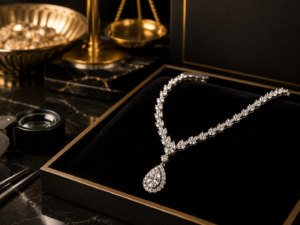
A diamond necklace is not just jewelry. It holds real monetary value, and when the time comes to sell, you deserve every dollar it is worth. The problem is that most sellers go in without a plan. They take the first offer they get, skip the appraisal, or choose the wrong buyer entirely. The result is money left on the table. If you want to sell a diamond necklace and walk away with a fair price, this guide covers exactly what to do, step by step.
Step 1: Understand the 4 Cs That Make Your Necklace Valuable
Before you contact a single buyer, you need to know what you are selling. Diamond value comes down to four factors, commonly called the Four Cs.
- Cut refers to how well the diamond was shaped. A well-cut diamond reflects light beautifully and is worth more than a poorly cut one of similar size.
- Color is graded from D, which is colorless, down to Z, which has a visible yellow tint. Colorless diamonds at the top of the scale are rarer and command higher prices.
- Clarity measures internal and external flaws. Diamonds with fewer flaws are graded higher and sell for more.
- Carat weight reflects the size of the stone. Larger diamonds are generally worth more, but a smaller stone with excellent cut, color, and clarity can still outvalue a larger, lower-quality piece.
Beyond the stone itself, the setting matters too. A diamond necklace set in platinum or 18k gold carries additional metal value on top of the stone.
Step 2: Get a Professional Appraisal
This is the single most important step, and skipping it is the most common mistake sellers make. A professional appraisal from a certified gemologist gives you a written valuation of your necklace based on current market conditions. It tells you exactly what you have before any buyer gets to tell you what they think it is worth. That knowledge is power in any negotiation.
If your necklace came with a GIA or AGS grading certificate, hold onto it. Certified diamonds sell faster and for more money because buyers know the quality has been independently verified. No certificate? You can still sell, but plan to get an appraisal first, so you walk in with documentation backing up your price.
Step 3: Research Current Market Conditions
Diamond prices shift based on demand, economic trends, and the time of year. Selling during periods of high consumer demand, such as around the holidays or Valentine’s Day, can sometimes work in your favor.
Also, pay attention to shape trends. Round brilliant-cut diamonds consistently hold the strongest demand on the resale market. Fancy shapes like oval, pear, or emerald cut appeal to more specific buyers but can still command strong prices when demand is right. Checking recently sold listings on resale platforms gives you a realistic picture of where prices currently sit for your specific diamond characteristics.
Step 4: Know Your Selling Options
There is no single best place to sell a diamond necklace. The right choice depends on how quickly you need the money and how much time you are willing to invest in the process.
Pawn shops and jewelry buyers offer the fastest path to cash. You bring the necklace in, receive an appraisal, and walk out with money the same day. The trade-off is that offers reflect the buyer’s need to resell at a profit, so expect to receive a percentage of full market value rather than the retail price.
Online resale platforms like eBay or consignment jewelry sites can yield higher prices by connecting you with end consumers who are willing to pay more. The downside is time. Finding the right buyer can take weeks or months, and the process requires photographs, descriptions, shipping, and ongoing communication.
Auction houses can work well for rare or high-value pieces. However, seller commissions typically run between 10 and 25 percent, and the timeline from submission to payment often stretches two to four months.
Jewelry stores and estate buyers are another option, particularly if you own a branded piece. If you want to sell Cartier jewelry or any other recognized luxury brand, a specialty buyer who understands that brand’s secondary market value will almost always offer more than a general buyer who does not.
Step 5: Set a Realistic Price Expectation
This is where sellers often feel disappointed, and it helps to go in with clear expectations. The resale value of a diamond necklace is almost always lower than the original retail price. Retail pricing includes brand markups, retail overhead, and profit margins built into the original sale. The secondary market prices based on what buyers are willing to pay to resell or keep the piece, not what a store originally charged.
A fair resale value for most diamond jewelry falls between 30 and 60 percent of the original retail price, depending on the stone quality, condition, documentation, and current demand. Your professional appraisal gives you a solid number to anchor that range.
Step 6: Compare Multiple Offers Before Deciding
Never accept the first offer you receive. Get at least two or three quotes from different buyers. The spread between offers can be significant, sometimes hundreds of dollars on a single necklace. When you have multiple offers in hand, you are in a much stronger position to negotiate. Let buyers know you are comparing options. Serious buyers will often sharpen their offers when they know they are competing for the sale. Ask each buyer to explain how they arrived at their number. A reputable buyer will walk you through the reasoning clearly. If someone cannot or will not explain their offer, move on.
FAQs
How do I know if my diamond necklace is real before selling?
A jeweler or pawn shop can test it quickly using professional tools. Look for metal stamps like 14K or PT950 on the setting. A GIA or AGS certificate, if available, confirms the diamond’s authenticity and quality grades.
Will I get the full retail price when I sell a diamond necklace?
No. Resale value is typically 30 to 60 percent of the original retail price. Buyers price based on current market demand and their need to resell at a profit. A professional appraisal helps you understand fair market value before negotiating.
Does the brand of the necklace affect how much I can sell it for?
Yes, significantly. Recognized luxury brands like Tiffany, Cartier, and Van Cleef command higher resale premiums because buyer demand for those names is strong and consistent on the secondary market.
Should I clean my diamond necklace before selling it?
A gentle clean with warm water and mild soap is fine. Avoid harsh chemicals or ultrasonic cleaners that could damage the setting. A presentable necklace creates a better first impression, but buyers assess the stone independently regardless of surface appearance.
Does the condition of the setting affect the sale price?
Yes. A damaged or worn setting can reduce buyer confidence and lower the offer. However, buyers often pay for the stone value separately from the metal, so even a damaged setting does not eliminate the diamond’s value.
Sell Your Diamond Necklace With Confidence at Pawn Shop Queens
We know how much is riding on a sale like this. At Pawn Shop Queens, we offer free, no-obligation appraisals on diamond necklaces and fine jewelry, with transparent pricing and same-day payment. Our team knows diamonds, understands the market, and explains everything clearly before you commit to anything. Whether you are ready to sell today or want to understand your options first, we are here to help. Visit us at 63-62 Saunders St, Suite 204, Rego Park, NY 11374, or call us at (718) 200-0332. Your free appraisal is waiting.