

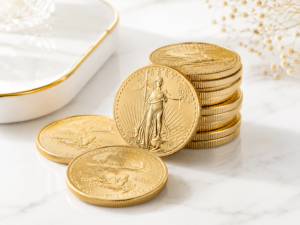
Gold coins are not just collectibles. They are real, liquid assets, and New York is one of the best places in the country to convert them into cash. But walking in unprepared is a fast way to leave money behind. If you want to sell gold coins in NY and get a price that actually reflects what you have, you need to understand your coins, know your options, and choose the right buyer. This guide covers all of it.
Step 1: Understand What Your Gold Coins Are Worth
Not all gold coins are priced the same way. Before approaching any buyer, you need to know which category your coins fall into, because the two types of value are very different.
Gold content value is the most straightforward. It is based on the coin’s weight, its gold purity, and the current gold spot price. Most gold bullion coins are marked with their content, such as 1 oz .9999 Gold. You can calculate a rough value by multiplying the weight and purity by the live spot price, which is available on sites like Kitco or the World Gold Council.
Numismatic value is collector value above the melt price. Rare coins, older coins, and coins in mint condition can be worth significantly more than their gold content alone suggests. A 1933 Saint-Gaudens Double Eagle, for example, is worth millions to collectors, not just the value of its gold. If you think your coin might carry collector value, get it evaluated by a professional numismatist or coin dealer before selling.
Knowing which type of value applies to your coins is the foundation of everything else.
Step 2: Identify Your Coins Specifically
Once you understand the two types of value, identify exactly what you have. Common gold bullion coins include the American Gold Eagle, Canadian Gold Maple Leaf, South African Krugerrand, and Austrian Gold Philharmonic. These are widely traded and priced primarily on gold content. Buyers across New York quote these quickly and competitively because the market for them is deep and active.
Numismatic coins are harder to categorize without expertise. Look for older dates, unusual mint marks, or coins in protective slabs from grading services like PCGS or NGC. A graded and slabbed coin has been independently verified for authenticity and condition, which adds buyer confidence and often adds to the price. Do not clean your coins under any circumstances. Cleaning removes surface patina and can destroy collector value entirely. Leave them exactly as they are.
Step 3: Get a Professional Appraisal Before You Sell
This step is non-negotiable for anyone serious about getting a fair return. A professional appraisal gives you an independent valuation of your coins before any buyer influences the conversation. It sets a benchmark. When you walk into a buyer’s office knowing your coins’ value, you are in a fundamentally stronger position than someone who has no idea and is relying entirely on the buyer’s assessment.
For bullion coins, the appraisal is straightforward: weight, purity, and spot price. For numismatic coins, a trained coin dealer or numismatist evaluates rarity, condition grade, and current collector market demand. Either way, having that number in hand before you negotiate is worth the time.
Step 4: Choose the Right Buyer for Your Situation
New York has no shortage of buyers, but they are not all the same. The right choice depends on what you are selling and how quickly you need the money.
- Pawn shops and local coin buyers offer the fastest path to cash. You walk in, the coins are evaluated, and if you accept the offer, you leave with money the same day. This is ideal when speed matters. Offers reflect the buyer’s need to resell at a profit, so you will receive a percentage of market value rather than the full spot price, but reputable buyers keep that margin fair and transparent.
- Online coin dealers can sometimes offer competitive prices, particularly for standard bullion coins with active trading markets. The trade-off is time and logistics. You will need to ship your coins with full insurance, wait for inspection, and then wait for payment. Not ideal if you need cash quickly.
- Auction houses work well for rare or high-value numismatic coins. If you have a genuinely rare piece, competitive bidding can push the price above what any single buyer would offer. However, seller commissions typically run 10 to 25 percent, and the process can take months from submission to payment.
- Coin shows and private collectors are another option for numismatic pieces. Selling directly to a collector eliminates the middleman, but finding the right buyer takes time and market knowledge.
Step 5: Compare Offers and Negotiate Confidently
Just as you would when you sell diamond jewelry online or in person, never accept the first offer for your gold coins without comparison shopping. Get quotes from at least two or three buyers. The difference between offers can be significant, especially for numismatic coins where valuation requires more subjective judgment. When you have multiple quotes in hand, use them. Let buyers know you are comparing offers. Serious buyers will often improve their numbers when they know they have competition.
Ask each buyer to explain their pricing. A reputable buyer will break down how they arrived at the offer, including how they are factoring in the spot price, condition, and any numismatic premium. If a buyer cannot or will not explain their number, walk away. Always get a written receipt that documents the coin description and the final sale amount. This protects you and creates a record for tax purposes, since selling gold coins at a profit may be subject to capital gains tax in the United States.
FAQs
How is the price for gold coins calculated by buyers?
Buyers typically calculate offers based on the coin’s gold content, its weight and purity, and the current gold spot price. Numismatic coins are also evaluated for rarity and condition, which can push the value significantly above melt price.
Do I need to clean my gold coins before selling them?
No. Never clean gold coins before selling. Cleaning removes natural surface patina and can permanently damage collector value. Buyers prefer coins in their original, untouched condition, and cleaning almost always reduces the final offer.
What documents or certificates help when selling gold coins?
PCGS or NGC grading certificates add significant value for numismatic coins by independently verifying authenticity and condition. For bullion coins, original packaging and certificates of authenticity from the mint are helpful but not required.
Is selling gold coins in New York subject to taxes?
Yes. Selling gold coins at a profit is generally subject to capital gains tax in the United States. The IRS classifies gold as a collectible, taxed at up to 28 percent for long-term holdings. Consult a tax professional for guidance specific to your situation.
What is the difference between bullion coins and numismatic coins?
Bullion coins are valued primarily for their gold content and trade close to the spot price. Numismatic coins carry additional collector value based on rarity, age, and condition, and can be worth far more than their metal content alone.
Get a Fair, Fast Offer at Pawn Shop Queens
We have helped sellers across New York get real value for their gold coins, and we are ready to do the same for you. At Pawn Shop Queens, we offer free, no-obligation appraisals on gold coins and precious metals, with transparent pricing and same-day cash. Our team understands both bullion and numismatic value, and we explain every step so you always know exactly what your coins are worth. Visit us at 63-62 Saunders St, Suite 204, Rego Park, NY 11374, or call us at (718) 200-0332. Bring your coins in and let us show you what they are really worth.